Artists Aside - Mixtape
The Dutch Job: The Story of Roadrunner.
June 2, 2026
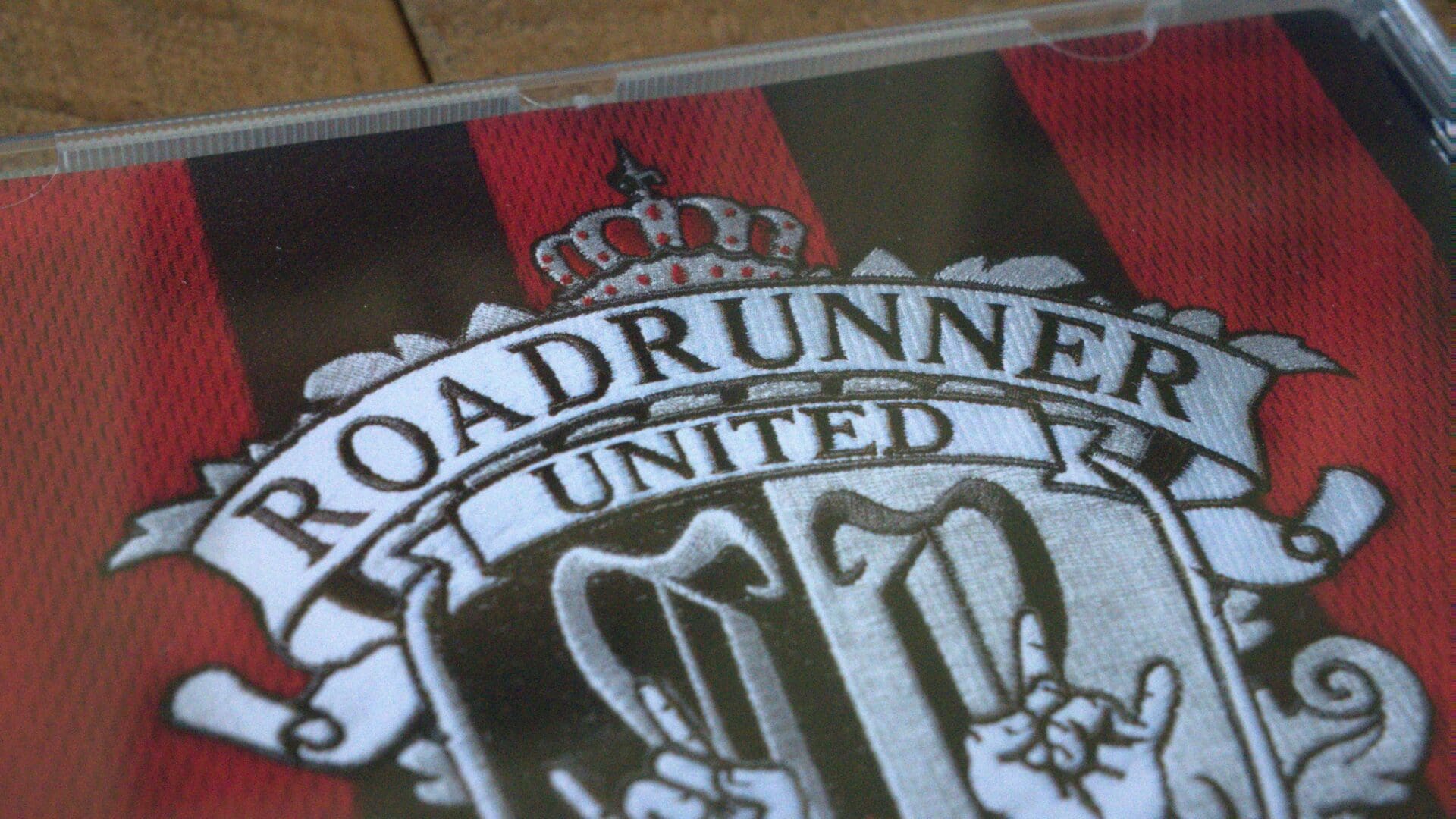
October 2005 saw the release of something the music industry had never seen before. Roadrunner United: The All Star Sessions brought together 56 artists worldwide to write, produce and record 18 tracks celebrating the 25th anniversary of Roadrunner Records.
The most incredible part was the willingness from the ‘All Stars’ to pause their own projects to contribute riffs, solos and vocals. History has well-documented the love-hate relationships between musicians and their leash-holding labels, so a company that produced nothing but love from its contractors isn't just rare; it's phenomenal.
The world has seen an abundance of tribute and compilation records, but never has there been anything like this in the history of the business. Roadrunner took an approach that had never before been seen, with names from Nickelback to Slipknot to Cliff Richard being stamped with their logo.
DAWN OF A GOLDEN AGE
“Roadrunner was founded by 2 dudes. One was Cees [Wessels], who was a record executive with experience and another one was a guy called Jan van de Linden. He's the guy no one knows about” says Jim Saxton, who currently finds himself editing an independent documentary on the company's history - spending over five years interviewing current or ex-Roadrunner musicians in the process.
“Roadrunner went straight out of the gate and went: we're starting in the Netherlands, but we're going to immediately open a UK office, US office, and a Japanese office.
“The first major relationships they formed with bands were predicated on the understanding of ‘sign with us because we can get you worldwide distribution’. That was a massive deal.”
Wessels and van de Linden found their magic through the latter's financial reserves from running an export business in the Rotterdam docks allowing Wessels to take risks and build a never-before seen business model. “Cees just had a risk sensibility. He was more happy to risk on certain bands. As a result, more money went into bands that wouldn't have got money anywhere else. Because of that, he had so many bands - more of them hit.”
The usual approach for a label would be to tread lightly and only put pen to paper if 110% sure that money could be made back. The reality that Cees came to, however, was that only one in ten bands needed to truly take off for the nine other signings to be financially doable.
“It was a Dutch company with American successes. You had a very European business mindset, and American idealism.
“Cees wasn't worried about the quarterly budgets because he was already well into his career. He started Roadrunner when he was 40 in 1980. By the time you hit the 90s and 2000s, he knows full well. We know Nickelback took 3 years to break.”
Wessels spent decades with RCA and Polygram Records. He has a John Denver gold record. He understood exactly what an audience would respond to. Which is what led Roadrunner to constantly keep its ear to the underground and push bands that would never otherwise get label attention.
INDEPENDENT (VOICE OF THE VOICELESS)
Roadrunner's main muscle was in its distribution and, in a sense, engineering. For example, if a band were to play in a new US city, Roadrunner would immediately develop relationships with the local record stores, radio stations and create events to promote the show. They had a man in every corner ensuring all roads led to the upcoming concert.
The label was also experts at manufacturing experiences - something Jim had an incredible personal experience with back in 2005. He had been handed a promo CD from a Roadrunner rep with a track by an upcoming band, Trivium. “I like that song, I'll buy the album” he thought, “Oh, I like this album, I'm gonna go to the show.”
This was Trivium's first UK headlining tour: “Prior to them being on stage there was an unknown experience that we are about to have. We were all just in a sweatbox in Leeds. Then as soon as they come out: ba-da-da-ba-da-da-nu-du-nu-nu-du-nu. Then we're all like - ‘holy fucking shit’.
“Everything starts to calcify in that moment and we know we're experiencing something completely fucking insane. That moment is what Roadrunner was trying to engineer. Because that turned me from a CD-buyer to a t-shirt buyer to another CD buyer - and, you know, you're off to the races.
“Everything that created the moment we all went ‘holy shit’ to: you need the band to be on side and reliable enough to deliver the music; you need a tour manager that's gonna work; you need a front-of-house guy that knows what the music is gonna sound like; you need a representative to put that CD in my hand. You can trace it all back to ‘this was engineered.’”
Magical experiences aren't just limited to the false promises in Disneyland adverts, then.
NO MAS CONTROL
2010 marked the ‘Red Wedding’ when Roadrunner was acquired entirely by titans Warner Music Group. 17 months later they shut down Roadrunner's UK, Netherlands and Canada offices, with large cutbacks being made across the whole company.
Managers woke up with bands on tour to realise they had to outsource their entire operations to survive. All of a sudden, they had to find booking agents that weren't going to steal 50% of earnings; t-shirt companies that could operate within people's budgets; lawyers who would actually be able to provide time of day if things went belly up. Bands had to work ten times as hard to sell 10% of the records - which isn't even the bread and butter of income.
The same day, Trivium singer and Roadrunner United project leader Matt Heafy took to Twitter: “I wish I knew who or what to blame specifically, and chew off its heads - but Roadrunner records just fired some of their best employees.
“I don't know if it's corporate greed or it's due to the fact that no one puts value in physical art and that piracy created a domino effect, but our friends who are being tossed away so quickly by the label are now out of jobs.
“These people helped bands get where they are today. My heart goes out to my friends who have been delivered this awful news today. You helped us get where we are. You're in our thoughts. Truth is. I love Roadrunner. I'm upset with what happened to the people I care about. Roadrunner helped build metal that I love. It wasn't ROADRUNNER canning people. It's the ‘company’ who ‘owns’ it. Long live ROADRUNNER (the memory of something that once was great).”
“I think we as a consumer got the rug pulled”, Jim claims. It's hard to disagree, seeing how a place so loved got annihilated so quickly. It is equally unsurprising, then, that countless bands left Roadrunner - many fleeing to Germany's Nuclear Blast Records alongside ex-Roadrunner executive Monte Conner who departed after the ‘Judgement Day’ in 2012.
THE END
Roadrunner Records redefined the role of a record label, forming concrete relationships with their bands thanks to hard-working teams in love with the people they worked for. Their investment allowed countless bands who had no path to success find it. These actions always spoke louder than the music. It is therefore touching to know their years of excellence can be forever celebrated with an album like the All Star Sessions.